


Yes, Hotels.com is legit. It has been taking hotel bookings since 1991, it belongs to Expedia Group, and millions of travelers check in every year on reservations made through it without a hitch. So why does its Trustpilot page read like a crime scene, with more than two-thirds of its 16,000-plus reviews sitting at one star? Because angry people write reviews and happy people go to the beach. The more useful question is what goes wrong for the people who get burned, and whether any of it can happen to you. Most of it can be avoided once you know where the problems start, and that is what this guide covers.
Is Hotels.com legit or a scam?

Hotels.com is a real online travel agency, not a scam. It started in Dallas in 1991 as Hotel Reservations Network, bought the Hotels.com domain and renamed itself in 2002, and has shared a corporate parent with Expedia since 2001. It became part of Expedia Inc. when that company was spun off in 2005. You can read the full company history on Wikipedia’s Hotels.com page.
When you book, the reservation is real. Hotels.com passes it to the property, the property holds a room for you, and you get a confirmation number you can quote at the front desk. Scam sites take your money and never create a booking. That is not what happens here.
What Hotels.com does have is a customer service reputation that trails its reliability as a booking engine. Those are two different things, and the reviews mix them together.
Who owns Hotels.com?
Hotels.com is owned by Expedia Group, the same company behind Expedia, Vrbo and Travelocity. Expedia Group is listed on the Nasdaq, so it files public financial reports and answers to regulators in the US and abroad.
This matters for two practical reasons. First, Hotels.com, Expedia and Vrbo share much of the same hotel inventory, so the rate you see on one is often identical on the others. Second, since 2023 the three brands have shared a loyalty program called One Key, which pays rewards as OneKeyCash that you can spend on any of them.
What do 15,000+ Hotels.com reviews actually say?
On Trustpilot, Hotels.com has 16,739 reviews and a TrustScore of 3.2 out of 5 (checked October 2026). The breakdown is lopsided: 68% are one star, 23% are five star, and the middle barely exists. ConsumerAffairs is harsher, with a 1.1 rating from about 4,100 reviews, 94% of them one star.
Read enough of them and the complaints cluster into a short list:
- Refunds denied or slow, usually on non-refundable rates or after a cancellation that never reached the hotel
- Long phone holds, and being bounced between Hotels.com and the hotel, each saying the other must fix it
- Charges that didn’t match expectations, such as deposits, resort fees or travel insurance added at checkout
- Listings that promised a pool, shuttle or breakfast the property didn’t deliver
- Wrong dates or room types after a change to the booking
Notice what is missing, because it is the clearest sign that Hotels.com is legit rather than a scam. Relatively few people say their booking simply didn’t exist. The complaints are about what happens when something changes or goes wrong, and that is where your own decisions make the biggest difference.
What won’t Hotels.com reviews tell you?
A star rating can’t show you who is responsible for what, or which bookings tend to cause trouble. Here is the context the review pages leave out.
Who you paid decides who fixes the problem
On many listings you can choose to pay now or pay at the property. If you pay now, Hotels.com charges your card and is the company you deal with for refunds and billing. If you pay at the property, the hotel charges you, and billing disputes are mostly between you and the hotel.
A lot of “they keep passing me back and forth” stories come from people who don’t know which side holds their money. Check the payment line on your confirmation email before you call anyone. It can save you a long stretch of hold music.
Most refund fights start with a non-refundable rate
Non-refundable rates are cheaper for a reason: you give up flexibility. Hotels.com shows the cancellation policy when you select a room and again before payment. Once you book a non-refundable room, Hotels.com usually can’t refund it unless the hotel agrees to waive the rule, and many hotels won’t.
If your plans might change, pay the extra for free cancellation and note the deadline. Confirmation emails list it in the hotel’s local time, which catches people out when they cancel from another time zone.
The hotel’s score on Hotels.com is not the whole story
Hotels.com reviews come from guests who booked and stayed, which is good. The catch is sample size. A hotel can show a glowing score built on a few hundred reviews on Hotels.com and a noticeably lower one built on ten thousand reviews on Booking.com or Google. Before you commit to a place, especially a cheap one in a big city, read the most recent low-scoring reviews on at least one other platform. Complaints about room size, noise and cleanliness show up there first.
US prices now have to include mandatory fees
Hidden resort fees used to be a top complaint about every booking site. Since May 12, 2025, the US Federal Trade Commission’s rule on unfair or deceptive fees has required hotels and third-party booking platforms to show a total price that includes any mandatory fees they can calculate upfront. Taxes and optional extras can still be added later, but they must be shown before you pay. Older reviews about surprise resort fees describe a situation that has since changed for US bookings. Outside the US, local rules vary, so check the final total on the payment page.
The “free night after 10 nights” deal is mostly gone
Plenty of guides still say you get a free night after booking 10 nights. That was Hotels.com Rewards. In the US and several other markets, it was replaced in 2023 by One Key, where you earn OneKeyCash on eligible bookings (2% on eligible hotel stays when the program launched). Some country sites still run the older stamps program, so check the rewards terms on the version of Hotels.com you use.
Is Hotels.com safe to book on?
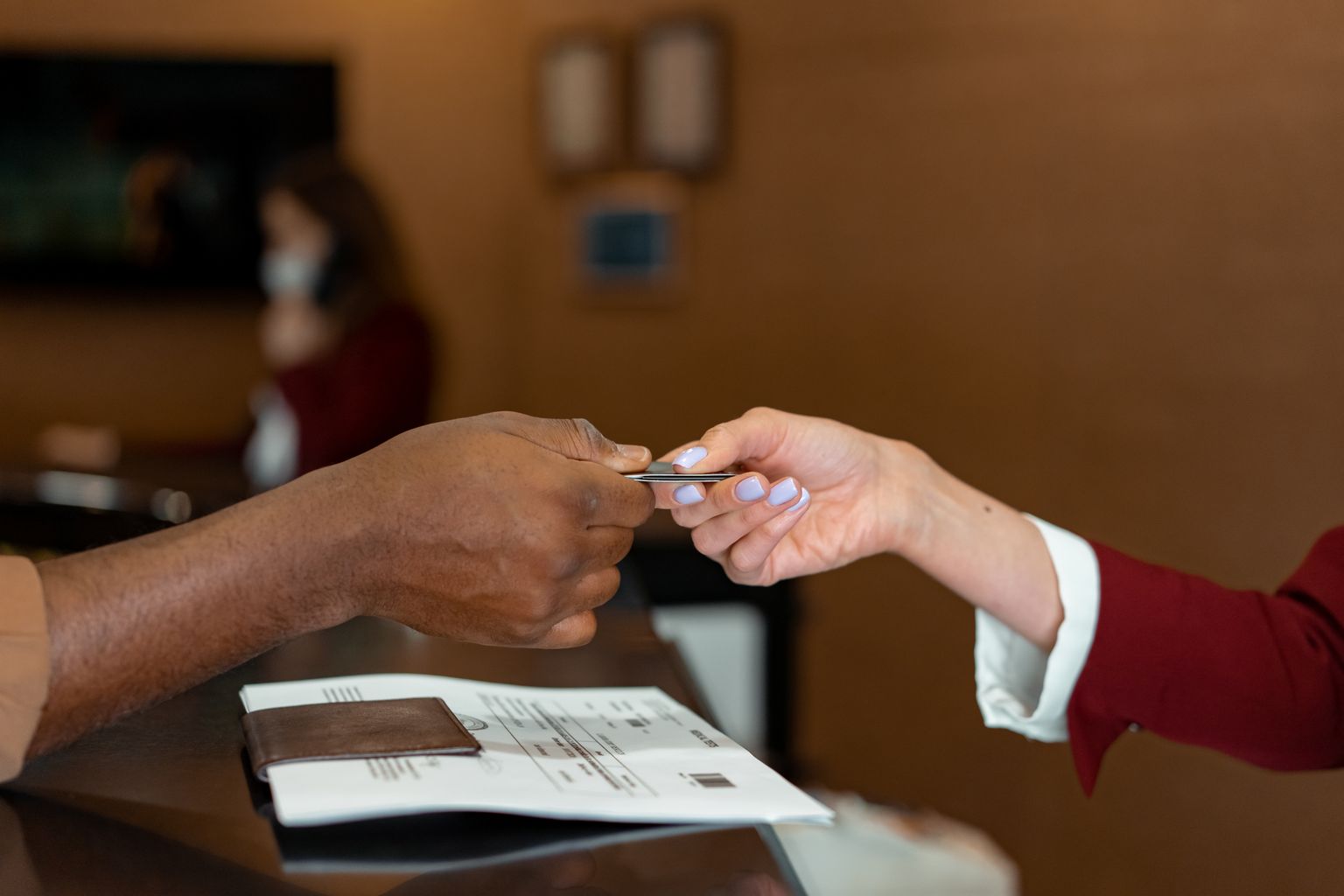
Booking on hotels.com itself, or in the official app, is safe. Payments run over an encrypted connection, and you are dealing with a large, regulated company. The bigger risk sits around the edges, with people pretending to be Hotels.com.
Watch out for these:
- Fake support numbers. Scammers buy search ads and post phone numbers claiming to be Hotels.com support. Only use the contact options inside your account or the app.
- Lookalike sites. Type the address yourself or use the app. Don’t book through a link in an unexpected email or text.
- Messages asking you to “re-confirm” payment. If a property or “agent” asks you to pay again by bank transfer or through a link to avoid cancellation, stop and check your booking in the app first.
Paying with a credit card rather than a debit card also gives you chargeback rights if a dispute goes nowhere.
Why is Hotels.com sometimes cheaper than booking direct?
Hotels.com is cheaper when it has member prices, package rates or non-refundable deals that the hotel doesn’t advertise on its own site. Big platforms negotiate rates and run sales across thousands of properties, and the hotel accepts a commission in return for the booking.
It isn’t always cheaper, though. Hotel chains often reserve their best rates, free Wi-Fi or room upgrades for members who book direct. For a chain hotel where you have status, booking direct usually wins. For an independent hotel in a city you don’t know, Hotels.com’s filters and verified reviews often make it the easier choice.
Is Hotels.com reliable compared with Booking.com and booking direct?
For the booking itself, Hotels.com is as reliable as its big competitors. The differences show up in support, rewards and cancellation flexibility.
| Feature | Hotels.com | Booking.com | Booking direct |
|---|---|---|---|
| Owner | Expedia Group | Booking Holdings | The hotel or chain |
| Rewards | One Key (shared with Expedia and Vrbo) | Genius discounts | Chain loyalty program |
| Who handles refunds | Hotels.com on prepaid bookings | Often the property | The hotel |
| Best for | Expedia loyalists, US travelers | Wide choice, Europe and Asia | Chain loyalists, special requests |
If you’re weighing up the two big platforms, our Booking.com vs Hotels.com comparison goes through fees, rewards and support in more detail, and we’ve looked at whether Booking.com is legit in the same way.
How do you book on Hotels.com without getting burned?
Most bad experiences come from a few avoidable mistakes. This short routine covers them:
- Pick free cancellation unless you’re certain. The few dollars saved on a non-refundable room rarely cover the risk of a change.
- Read the payment line. Know whether Hotels.com or the hotel is charging you before you book.
- Screenshot the final price and cancellation deadline. Disputes go faster when you have proof.
- Cross-check recent reviews elsewhere. Ten minutes on another platform can rule out a noisy or dirty property.
- Contact the hotel a few days before arrival. Quote your Hotels.com confirmation number and confirm the booking, especially for late arrivals or special requests.
- Use the app for changes. Self-service cancellations and changes are usually faster than calling, and they leave a written record.
- Pay by credit card. It gives you a fallback if a refund stalls.
The same habits work on any booking site, which is why our guide on whether Trip.com is legit ends up recommending nearly the same checks.
FAQs
Q1. Is Hotels.com legit for international hotels?
Ans: Yes. Hotels.com lists properties worldwide, and the booking process is the same abroad. Cross-checking reviews matters more in unfamiliar cities, and you should confirm that the final total includes local taxes.
Q2. Is Hotels.com the same as Expedia?
Ans: They are separate brands owned by the same company, Expedia Group. They share much of the same inventory and the One Key rewards program, so prices are often identical.
Q3. Can I get a refund from Hotels.com?
Ans: On a refundable rate, yes, if you cancel before the deadline shown on your confirmation. On a non-refundable rate, a refund depends on the hotel agreeing to waive its policy.
Q4. Is Hotels.com trustworthy for last-minute bookings?
Ans: Yes, and last-minute deals are one of its strengths. For same-day arrivals, call the hotel after booking so you know the reservation is definitely in their system.
Q5. Why does Hotels.com have so many bad reviews?
Ans: Review sites attract people with problems, and the most common ones involve refunds on non-refundable rates and slow customer service. Booking failures, where no reservation exists at all, are rare in the complaints.
Conclusion
So, is Hotels.com legit? Yes. It is a legitimate booking site with a long track record and a big parent company behind it. The 15,000-plus reviews are worth reading, but mostly as a map of where things go wrong: refunds, rigid rates and support queues. Choose flexible rates, know who is charging you, and double-check reviews on a second platform, and you’ll avoid nearly every story on those review pages. For more practical booking advice and destination guides, browse the latest posts on My Travelling Guide.