The drinks cart is rolling down the aisle, the seatback map says 580 mph, and your coffee isn’t even rippling. “How fast do planes fly?” is one of the most common questions passengers ask, and for a typical airliner the answer is around 520 to 565 mph at cruise, much faster than it feels from your seat. The exact number depends on two things: which part of the flight you’re in, and what kind of plane you’re on.
This guide walks through takeoff, cruise, and landing speeds, compares planes from a Cessna to Concorde, and explains why your flight time changes with the wind. All figures are as of November 2026.
Quick answer: Most commercial jets cruise at about 500 to 600 mph (Mach 0.78 to 0.85). They climb away from the runway at roughly 165 to 195 mph and cross the runway to land at about 155 to 170 mph. Small private planes fly far slower, around 130 mph at cruise.
| Phase or plane type | Typical speed (mph) | Knots | km/h |
|---|---|---|---|
| Takeoff, airliner (just after liftoff) | 167 to 193 | 145 to 168 | 269 to 311 |
| Climb below 10,000 ft (US speed limit) | Up to 288 | Up to 250 | Up to 463 |
| Cruise, airliner | 518 to 564 | 450 to 490 | 833 to 907 |
| Approach and landing, airliner | 155 to 171 | 135 to 149 | 250 to 276 |
| Small plane cruise (Cessna 172) | 132 | 115 | 213 |
| Fighter jet top speed (F-16) | 1,500 | 1,303 | 2,414 |
Airliner and Cessna figures from the EUROCONTROL Aircraft Performance Database; speed limit from FAA rules; F-16 from the US Air Force. Confirmed November 2026.
How Fast Do Planes Fly at Cruising Altitude?
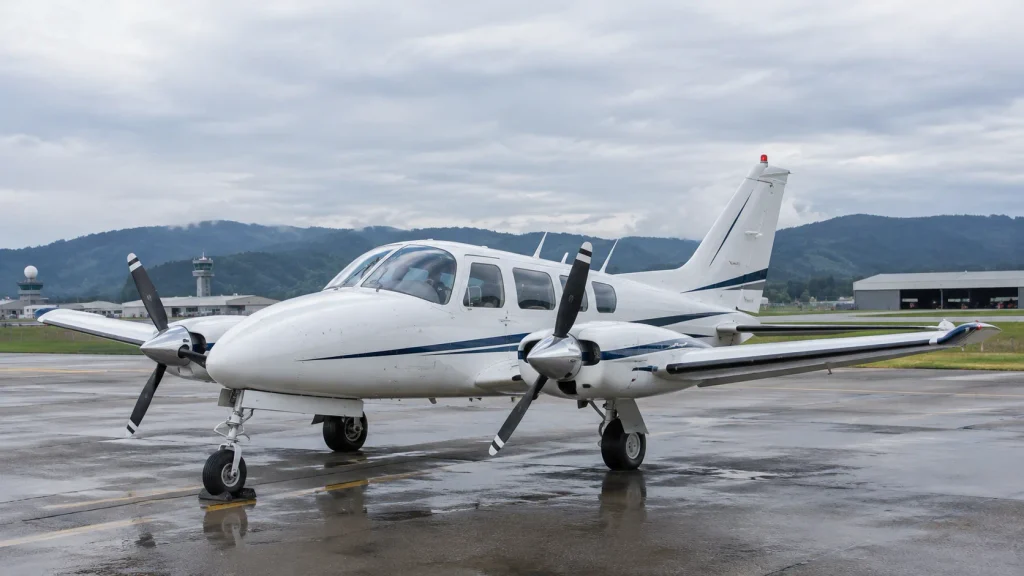
Commercial jets cruise at about 518 to 564 mph (450 to 490 knots, 833 to 907 km/h), usually somewhere between 30,000 and 40,000 feet.
That’s where airliners spend most of a trip, high above the weather in thin air that creates less drag. The newest long-haul jets, like the Boeing 787 and Airbus A350, can climb as high as 43,000 feet.
Pilots talk about cruise in Mach numbers. At Mach 0.85, a plane is flying at 85% of the speed of sound. Mach is your speed as a fraction of the speed of sound, and the speed of sound itself changes with altitude. NASA explains that it depends on the air’s temperature, and temperature drops as you climb. Near sea level, the speed of sound is about 760 mph, and in the cold air at cruising altitude it’s noticeably slower, so the same Mach number means fewer mph up high.
| Aircraft | Cruise Mach | Cruise speed (mph) | Knots | km/h |
|---|---|---|---|---|
| Airbus A320neo | 0.78 | 518 | 450 | 833 |
| Boeing 737 MAX 8 | 0.79 | 521 | 453 | 839 |
| Boeing 787-8 | 0.85 | 541 | 470 | 870 |
| Airbus A350-900 | 0.85 | 564 | 490 | 907 |
Typical cruise from the EUROCONTROL Aircraft Performance Database. Boeing lists the 787 at Mach 0.85, and Airbus lists the A350 at Mach 0.85. Checked November 2026.
Do Planes Always Fly at Full Speed?
No. Airlines fly an economy speed set by a “cost index” that balances fuel against time, as SKYbrary explains. A low cost index means a slower cruise and less fuel burned, so your plane rarely flies at its maximum speed.
How Fast Does a Plane Take Off?
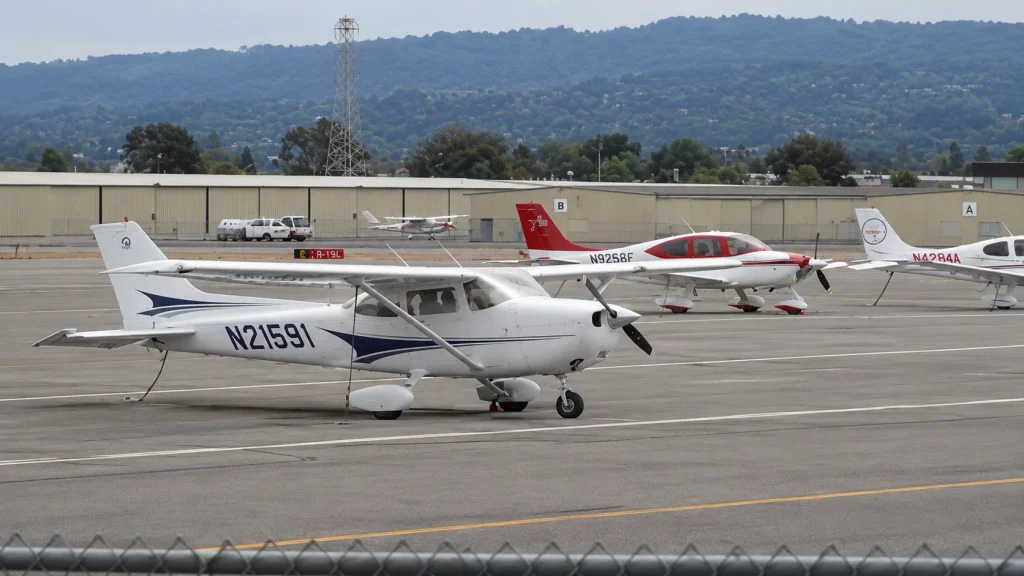
Airliners are typically doing about 165 to 195 mph (145 to 168 knots) as they climb away from the runway, while a small plane like a Cessna 172 is airborne at around 70 mph (60 knots).
Those are EUROCONTROL’s V2 figures, the safe climb speed reached just after the wheels leave the ground. The A320neo and 737 MAX 8 are listed at 145 knots (167 mph), and heavier wide-bodies like the Boeing 777-300ER are listed at 168 knots (193 mph).
On the way down the runway, pilots work through three speeds:
- V1: The decision speed. Past this point, the takeoff continues even if something goes wrong.
- Rotate (VR): The pilot lifts the nose, and you feel the tilt back in your seat.
- V2: The safe climb speed, reached within a few seconds of liftoff.
What changes takeoff speed:
- Weight: A full plane with fuel for a long flight needs more speed.
- Airport elevation and heat: Thin, hot air, like summer in Denver or Phoenix, means a longer, faster run.
- Wind: Planes take off into the wind, because a headwind shortens the takeoff run.
- Runway length: Shorter runways call for different flap settings.
What Happens to Speed During the Climb and Descent?
Below 10,000 feet, US rules cap planes at 250 knots (288 mph, 463 km/h), so airliners stay well under cruise speed near the ground.
The rule, 14 CFR 91.117, keeps speeds down in the busy airspace around airports, where traffic is heaviest. That’s also why the climb happens in steps you can feel.
A minute or two after takeoff, the engines get noticeably quieter. That’s normal: pilots reduce from takeoff power to climb power once the plane is safely airborne. Above 10,000 feet, the plane speeds up toward cruise.
On the way down, the reverse happens. The plane slows to 250 knots or less before 10,000 feet, then keeps slowing as flaps extend for the approach. That gentle slowing, long before you see the ground, is the plane setting up for landing.
How Fast Do Planes Fly When Landing?
Airliners cross the runway threshold at about 155 to 171 mph (135 to 149 knots, 250 to 276 km/h), and touch down slightly slower.
The A320neo is listed at 135 knots (155 mph) and the 737 MAX 8 at 145 knots (167 mph), by EUROCONTROL’s figures. The FAA groups planes into approach categories by landing reference speed under 14 CFR 97.3: most airliners fall in Category C (121 to 140 knots) or Category D (141 to 165 knots). A Cessna 172, by contrast, lands at about 75 mph (65 knots).
Why landing feels so fast: At cruise, there’s nothing nearby to judge speed against. On final approach, the ground rushes past your window, so 160 mph feels much quicker than 550 mph did.
The sounds you hear:
- Flaps and slats: The whirring as panels extend from the wings lets the plane fly slowly without stalling.
- Spoilers: Panels pop up on the wings after touchdown to dump lift.
- Reverse thrust: That roar right after landing redirects engine thrust forward to help slow the plane.
How Fast Do Planes Fly by Aircraft Type?
Small planes cruise at about 130 mph, turboprops at 315 to 415 mph, jets at 520 to 565 mph, and fighter jets can top 1,500 mph.
| Type | Example aircraft | Typical cruise speed (mph) | Typical use |
|---|---|---|---|
| Small single-engine | Cessna 172 | 132 (115 knots, 213 km/h) | Flight training, short private trips |
| Regional turboprop | ATR 72 | 316 (275 knots, 509 km/h) | Short regional routes |
| Fast turboprop | Dash 8-400 | 414 (360 knots, 667 km/h) | Regional and commuter routes |
| Business jet | Phenom 300 | 518 (450 knots, 833 km/h) | Private and charter flights |
| Narrow-body airliner | Boeing 737 MAX 8 | 521 (453 knots, 839 km/h) | Domestic US flights |
| Wide-body airliner | Airbus A350-900 | 564 (490 knots, 907 km/h) | Long-haul and international |
| Fighter jet | F-16 | 1,500 top speed (1,303 knots, 2,414 km/h) | Military |
| Supersonic airliner | Concorde (retired 2003) | 1,330 top speed (1,156 knots, 2,140 km/h) | Transatlantic, 1976 to 2003 |
Cruise figures from EUROCONTROL; F-16 from the US Air Force fact sheet (“Mach 2 at altitude”); Concorde from the Smithsonian’s Air and Space Museum. Confirmed November 2026.
How fast do small planes fly? A Cessna 172 cruises at about 132 mph, roughly a quarter of an airliner’s speed, which is why a regional hop in a small plane takes much longer.
How fast do fighter jets fly? The F-16 reaches 1,500 mph at altitude, about twice the speed of sound, but only in short bursts. Fighters cruise much slower to save fuel, around 550 mph (480 knots) by EUROCONTROL’s figures.
Airspeed vs Ground Speed: Why Your Seatback Map Shows a Different Number
Your seatback map shows ground speed, which is your airspeed plus or minus the wind, so a strong tailwind can push the number well past 600 mph.
The jet stream is the big one. NOAA describes these bands of wind around 30,000 feet blowing west to east at more than 275 mph at times. Ride one, and your ground speed jumps. In one r/Planes thread, a traveler watched an Airbus A321neo hit 732 mph on FlightAware, well above its usual cruise, thanks to a strong tailwind.
That wind is why the same route takes different times in each direction. On American Airlines’ New York to Los Angeles route, AA1 from JFK to LAX is scheduled at 6 hours 14 minutes, while AA2 from LAX to JFK is scheduled at 5 hours 29 minutes, according to FlightAware (November 2026). Flying east, with the jet stream behind you, saves about 45 minutes.
The four speeds, in one line each:
- IAS (indicated airspeed): What the pilot’s instruments read, based on air pressure.
- TAS (true airspeed): The plane’s real speed through the air.
- Ground speed: Speed over the ground, after wind. This is your seatback map number.
- Mach: Speed as a fraction of the speed of sound.
Why Don’t Commercial Planes Fly Faster?
Flying much faster would burn far more fuel, create sonic booms, and, in the US, break the law over land.
As a jet approaches the speed of sound, drag rises sharply, so each extra mph costs a lot more fuel. That pushes ticket prices up, which is why airlines settle around Mach 0.78 to 0.85. Concorde proved supersonic travel could work, flying New York to London in under three hours at Mach 2.04, but it was costly to run and was retired in October 2003.
Rules are a factor too. 14 CFR 91.817 still bans civil supersonic flight over US land. After a June 2025 executive order, the FAA proposed ending the ban in favor of a noise-based standard, in its July 2026 proposed rule, but no final rule was in place as of November 2026.
Can Planes Go 1000 mph?
Airliners can’t. Today’s passenger jets top out around 600 mph. Military jets can: the F-16 reaches about 1,500 mph, and Concorde carried passengers at up to 1,330 mph before it retired.
How to check your speed on board: The seatback map or your airline’s app usually shows ground speed and altitude. Flight trackers like FlightAware show the same numbers for any flight, so friends on the ground can follow along.
How Does Plane Speed Affect Your Flight Time?
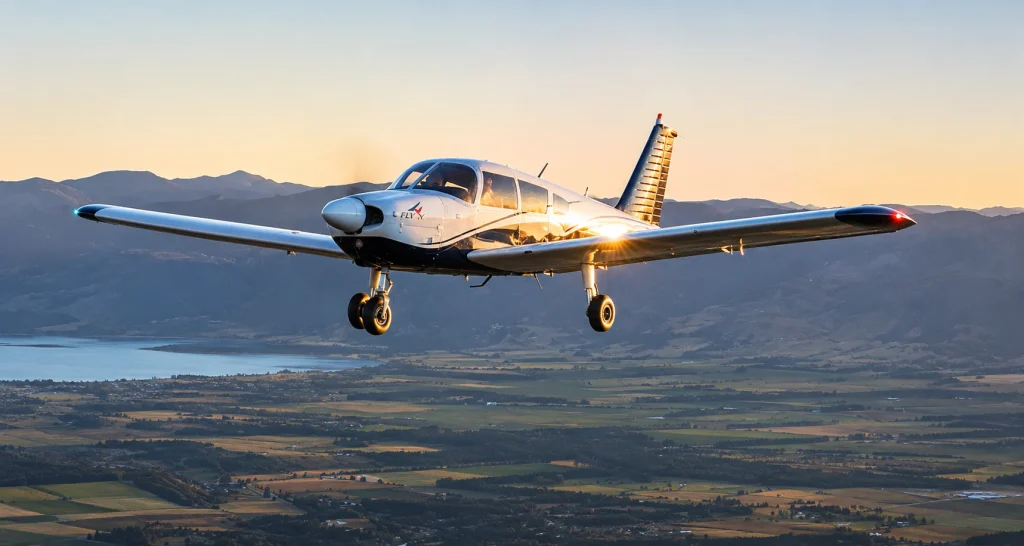
Cruise speed sets the bulk of your trip, but taxiing, climbing, wind, and padding in the schedule decide when you actually reach the gate.
- Schedules include padding: Airlines build in extra minutes for taxi lines and busy airports, which is why “early” arrivals are common. AA2 from LAX to JFK, for example, landed 18 minutes ahead of schedule on 4 November 2026.
- The return leg is often longer: Flying west into the jet stream adds time, as the JFK and LAX example shows.
- The wind changes daily: NOAA notes the jet stream band often shifts north and south, so the difference between eastbound and westbound times varies from one day to the next.
- Red-eyes ride the wind: Overnight flights from the West Coast to the East Coast fly with the jet stream, which is part of why the overnight trip east is shorter than the daytime flight west.
- Taxi and holding add up: A long taxi line at a big hub, or circling while waiting for a landing slot, adds time on top of the cruise, however fast the plane flew.
When you’re comparing itineraries, check the scheduled time for each direction as well as the distance. If you’re booking on short notice, it also helps to know whether last-minute flights are cheaper, since the fastest nonstop isn’t always the best-value option close to departure.
FAQs
1. How fast do passenger planes fly in mph?
Ans: Most passenger jets cruise at about 500 to 600 mph. A Boeing 737 MAX 8, common on US domestic routes, cruises at about 521 mph (Mach 0.79), per EUROCONTROL’s performance data, while long-haul jets like the A350 reach about 564 mph.
2. Can planes go 1000 mph?
Ans: Passenger jets can’t; they top out around 600 mph. Military jets can, with the F-16 reaching about 1,500 mph per the US Air Force. Concorde carried passengers at up to 1,330 mph before it retired in 2003.
3. How fast do planes fly per minute?
Ans: At a cruise speed of 518 to 564 mph, an airliner covers about 8.5 to 9.5 miles every minute. That’s roughly the length of a short highway commute every 60 seconds.
4. How fast do planes fly in km/h?
Ans: Commercial jets typically cruise at about 833 to 907 km/h, or roughly 800 to 965 km/h across the wider 500 to 600 mph range. Small planes like the Cessna 172 cruise at about 213 km/h.
5. How fast do planes fly compared to cars?
Ans: An airliner at cruise is about 8 to 9 times faster than a car doing 65 mph on the highway. A 6-hour cross-country flight would take roughly 40 hours of nonstop driving.
6. How fast do small planes fly?
Ans: A Cessna 172, one of the most common small planes, cruises at about 132 mph (115 knots), takes off at around 70 mph and lands at about 75 mph, per EUROCONTROL data.
7. Why do planes take longer flying west?
Ans: Flying west means flying into the jet stream, which blows west to east at high altitude. On American’s JFK and LAX nonstops, the westbound flight is scheduled about 45 minutes longer than the eastbound return.
8. Is takeoff or landing faster?
Ans: Takeoff is usually a little faster for the same plane. An A320neo is listed at 145 knots (167 mph) just after liftoff and 135 knots (155 mph) on landing, because it’s heavier with fuel at takeoff.
Conclusion
Three numbers sum it up: airliners climb away at about 165 to 195 mph, cruise at about 520 to 565 mph, and land at roughly 155 to 170 mph. Wind decides the rest, which is why your seatback map can show 650 mph or more and the eastbound flight lands early. If you’re planning a long flight and want to make those hours more comfortable, compare the American Airlines first class domestic experience with American Airlines business class seats before you book.

Deepti Ruhela Rajput
Travel has always been more than a hobby for Deepti Ruhela Rajput. As the author of MyTravellingGuide, she shares a lifelong love for discovering new destinations, comfortable stays, and memorable journeys. Curious, detail-oriented, and always ready for the next adventure, she enjoys everything from bustling city breaks to relaxing family holidays. Her mission is to inspire readers to travel more often, spend wisely, and create unforgettable memories along the way.